Cloudy It Supporting Remote Webinars

Angela Rayner’s Pledge to Support Virtual Meetings for Councils: How CloudyIT is Paving the Way

Angela Rayner’s Pledge to Support Virtual Meetings for Councils: How CloudyIT is Paving the Way

Angela Rayner’s recent announcement to support councils with standards reviews and virtual meeting enhancements highlights a major step in improving local government accessibility and transparency. CloudyIT is at the forefront of this transition, providing scalable virtual and hybrid meeting solutions tailored to Town and Parish councils across England and Wales.

CloudyIT’s Virtual Meeting Solutions: Tailored for Councils

Since the onset of COVID-19, CloudyIT has led the way in delivering robust virtual meeting setups for councils, installing nearly 100 systems to date. Our meeting solutions are designed to accommodate councils of all sizes, with flexible options that start at just £1,000. Whether your council requires a static or portable system, CloudyIT provides tailored setups that simplify virtual engagement, enabling councillors and residents alike to connect and participate seamlessly.

Our partnership with industry-leading vendors ensures councils receive reliable, high-quality technology solutions. From small parish councils to large council chambers, CloudyIT offers guidance and expertise through each step of the installation, setting councils up for success in today’s digital-first environment.

Case Studies: Real-World Success with CloudyIT’s Broadcasting Solutions

Neath Town Council: Neath Town Council has benefitted from CloudyIT’s virtual meeting technology, enhancing accessibility and streamlining operations. Katherine Charles shares why Neath chose CloudyIT for their broadcasting needs, noting the simplicity and reliability that made it the ideal solution. Watch her insights here.

Dunstable Town Council: Dunstable Town Council leverages CloudyIT’s hybrid meeting technology to improve resident engagement and enhance council efficiency. See the solution in action here.

Taunton Town Council: Recently, Taunton Town Council selected CloudyIT to upgrade their meeting technology with the Logitech Rally Bar and Sight Upgrade, a powerful combination that enhances audio and video clarity for both in-person and remote participants. This solution offers Taunton council members an immersive, accessible meeting experience that aligns with their commitment to transparency and resident engagement. Watch Taunton’s setup here.

Scalable Solutions for Every Council

CloudyIT’s meeting solutions are built to scale, offering councils of all sizes the flexibility they need to enhance meeting accessibility and efficiency. With an array of affordable options, councils can select a setup that meets their needs, from foundational AV systems to comprehensive hybrid solutions.

Enhanced Agenda Management with GovMeetings

CloudyIT’s GovMeetings (powered by Decisions) integrates seamlessly with our AV solutions, making agenda and meeting management straightforward. This tool allows councillors to participate in meetings, vote on items, and access agenda packs from any device, streamlining the meeting process for both councillors and residents.

GovAssist AI: Accurate Minutes and Natural Language Interaction

For councils aiming to streamline meeting administration, CloudyIT offers GovAssist, an AI-powered tool that enhances minute accuracy by identifying speakers and facilitating natural language interactions with agendas. With GovAssist, councillors and staff can search minutes, review agendas, and retrieve key discussion points seamlessly, saving time and ensuring accurate records.

Learn More About CloudyIT’s Hybrid Meeting Solutions

For councils looking to enhance their meeting technology, CloudyIT offers tailored solutions to meet the unique needs of Town and Parish councils. Explore our Hybrid Meeting Room Solutions to learn more about how our technology can help councils improve accessibility, productivity, and community engagement.

Aligned with SLCC, NALC, and other associations, CloudyIT is committed to supporting councils with innovative solutions that meet evolving standards and make virtual meetings accessible and efficient for everyone.




Linda Chandler - Digital Levelling Up

From Smart Cities to Smart Places – Why size doesn’t matter for digital innovation

Thank you to Linda Chandler, Industry Executive for Local Regional Government at Microsoft, for contributing this article.

Here, Linda elaborates on key points she joined us in discussing at the SLCC Practitioner's Conference in February 2022 for our presentation marking the launch of our Digital Levelling Up programme. (SLCC members can watch the session free of charge by requesting the recording here.)

​Read the full article for an insightful view of how the future of work has the potential to help our high streets, and how stakeholder collaboration at a hyperlocal level is crucial for achieving place-based agility.

Three clear shifts are aligning to make digital innovation relevant for places of all sizes: the affordability of smart city technology, the future of work and the cohesion of our communities.

From Smart Cities to Smart Places

When we think about the different pillars of a city – government, transport, education, health, retail etc. these are equally present on a smaller scale and are as recognisable in our district and parish councils as they are at a city or county level. Computing power in the 1980s was only available to a smaller number of organisations that could afford mainframe computers, but the 1990s saw the democratisation of this through ‘personal computers’ (PC) which combined with the global connectivity of the 2000s and the mobility era of 2010, have democratised technology for the average person in the street.
Evolution of Tech
Source: Evolution of Technology and User Interactions, Kuldeep Singh, Medium -https://medium.com/xrpractices/evolution-of-technology-and-user-interactions

More than a decade ago the phrase ‘smart cities’ made its entrance into the lexicon of how we talk about digital and place. At the time this was probably more “technology-push” than “citizen-pull” but as technology has become more reliable, faster and cheaper over the years and as societal acceptance and adoption of technology has grown, we are at an interesting point where technology that was only the preserve of the major global cities – say of London, Singapore or Barcelona – is now within reach of our towns and communities.

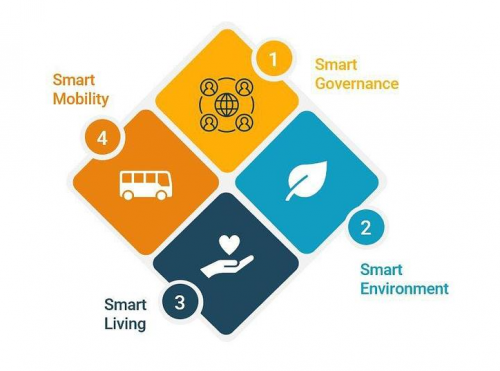
Smart place themes
Source: Smart places: from smart cities to smart towns and communities - https://www.farrpoint.com/smart-places

The Future of Work and the High Street

Another trend which has been growing for over a decade is that of flexible working. Microsoft technology has been at the forefront of enabling the future of work and as an organisation we have been involved in shaping it for some time. From being active in a government-backed initiative called the ‘Anywhere Working Consortium’ that was launched in 2011 to our more recent Work Trend Index and New Future of Work research.

Fast forward a decade and for those that could, the pandemic really forced some of us into the world’s largest working from home experiment. However, working from home and working in the office are extremes on a spectrum of places to work, but real life is rarely so binary.

While many find working from home flexible and productive, some find it isolating and do not have the facilities at home to accommodate a working environment.

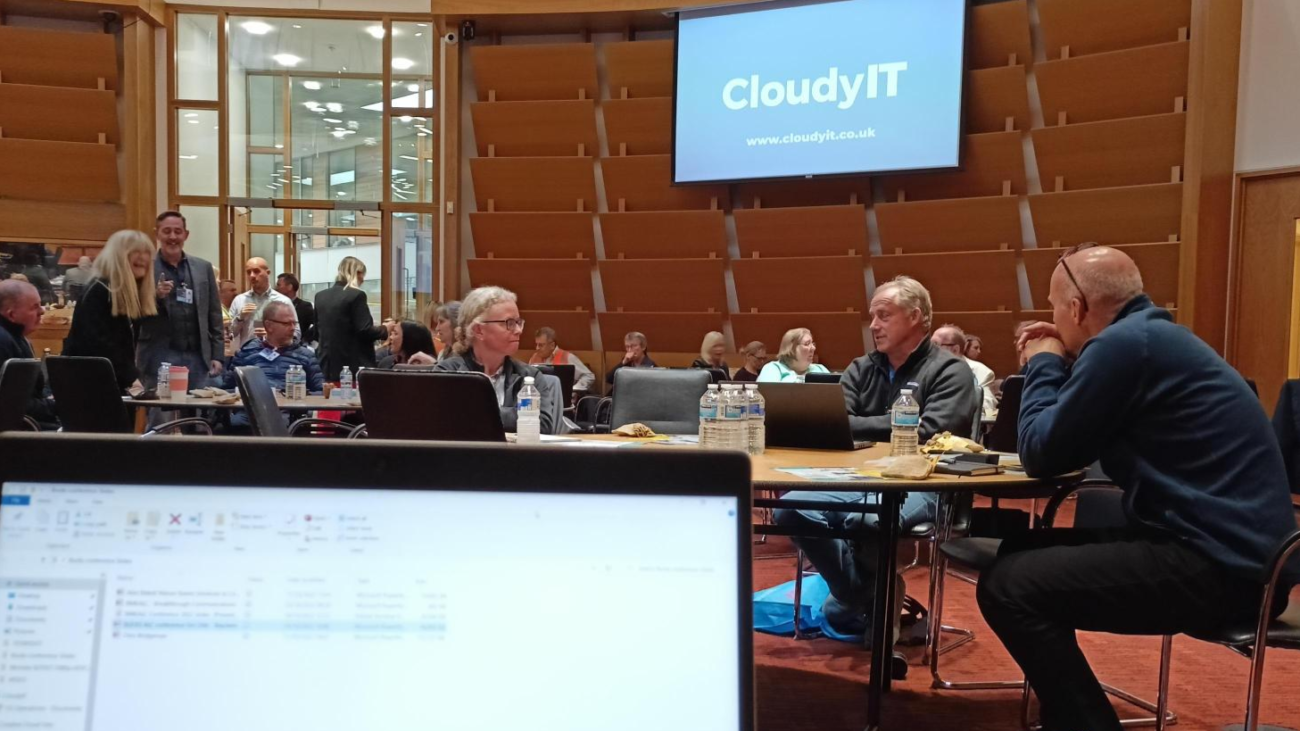
Example of broadcasted council meeting
Hybrid working: 6 Dec 2021 Woughton Community Council broadcasted council meeting

I’m sure you could walk down a high street near you and find many workers with their laptops perched on tables in coffee shops, escaping the confines of home.

What if your high street had a co-working space which was more conducive to supporting a work environment near to home?

What would that do for both the daytime economy and for supporting community connections?

Cohesive Communities and the Eco-system of Place

Digital technology is no longer confined to organisations, but is present in almost every aspects of our lives, places and society. 

We also recognise that the power of place is not just about local government.

Coffee shop working

It’s about the community of local organisations – an ‘eco-system of place’ – public services such as health, care, education etc., local businesses, social enterprises, the voluntary sector, residents.

Hyperlocal networks came into their own during the pandemic – they proved that they were close to understanding local issues, could act with agility and be innovative around how they create impact.

It’s my hope that the democratisation of smart technology, coupled with taking control over the future of local working can create the engagement, stakeholder connections and place-based agility that our towns and communities need.

Let’s face it – we all stand to gain from this approach – it’s not so much about smart technology, but developing smart sustainable economic futures in the places we live.